Algae Globe
Algae refer to thousands of photosynthetic organisms, from unicellular microalgae to seaweed. These organisms are in large part responsible for the oxygen in our atmosphere. We eat some varieties, but there is great potential in the expansion of their cultivation. Some varieties could be used to treat waste and create fertilizer, and there is ongoing research into their use in the production of biofuel.
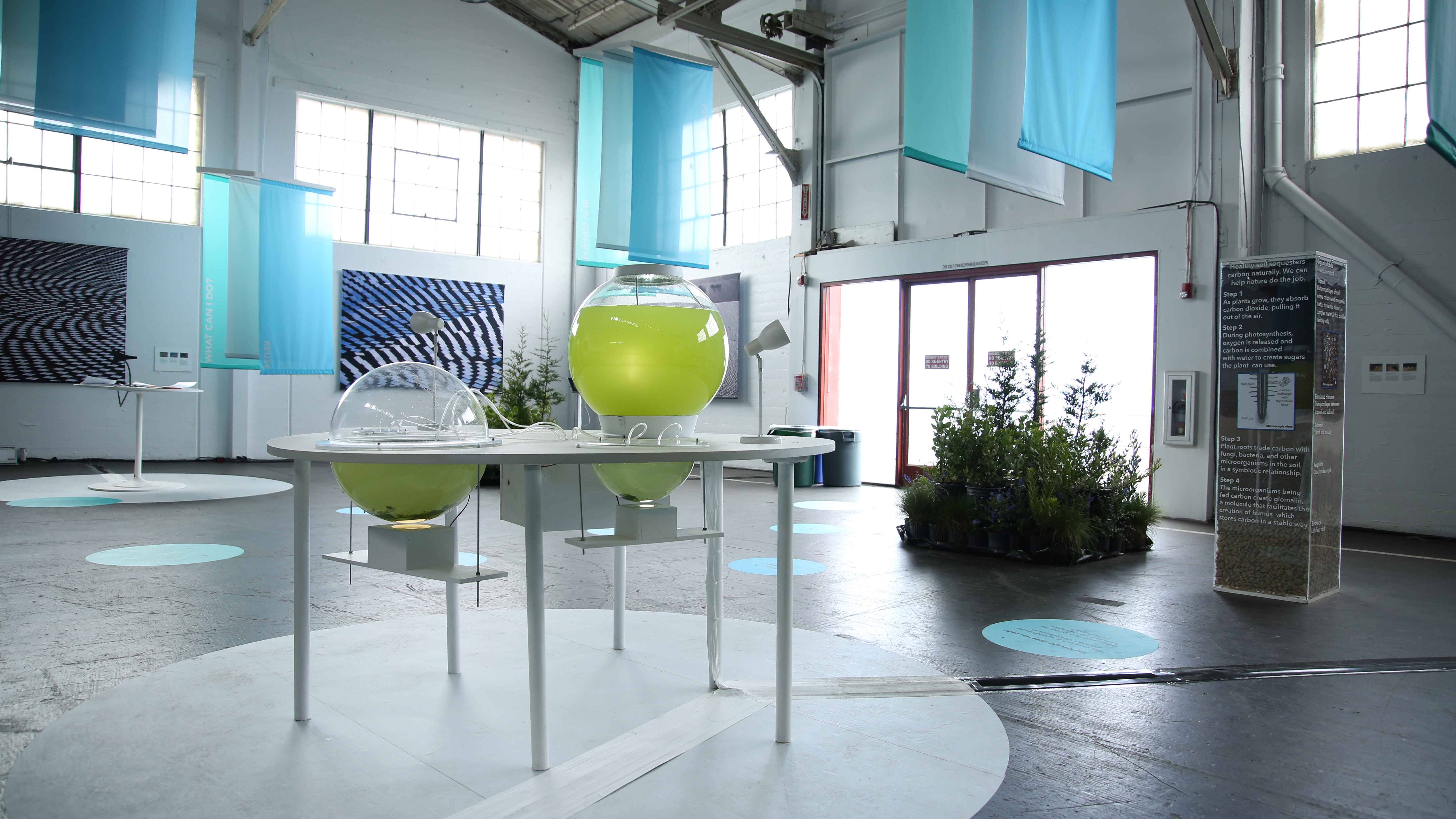
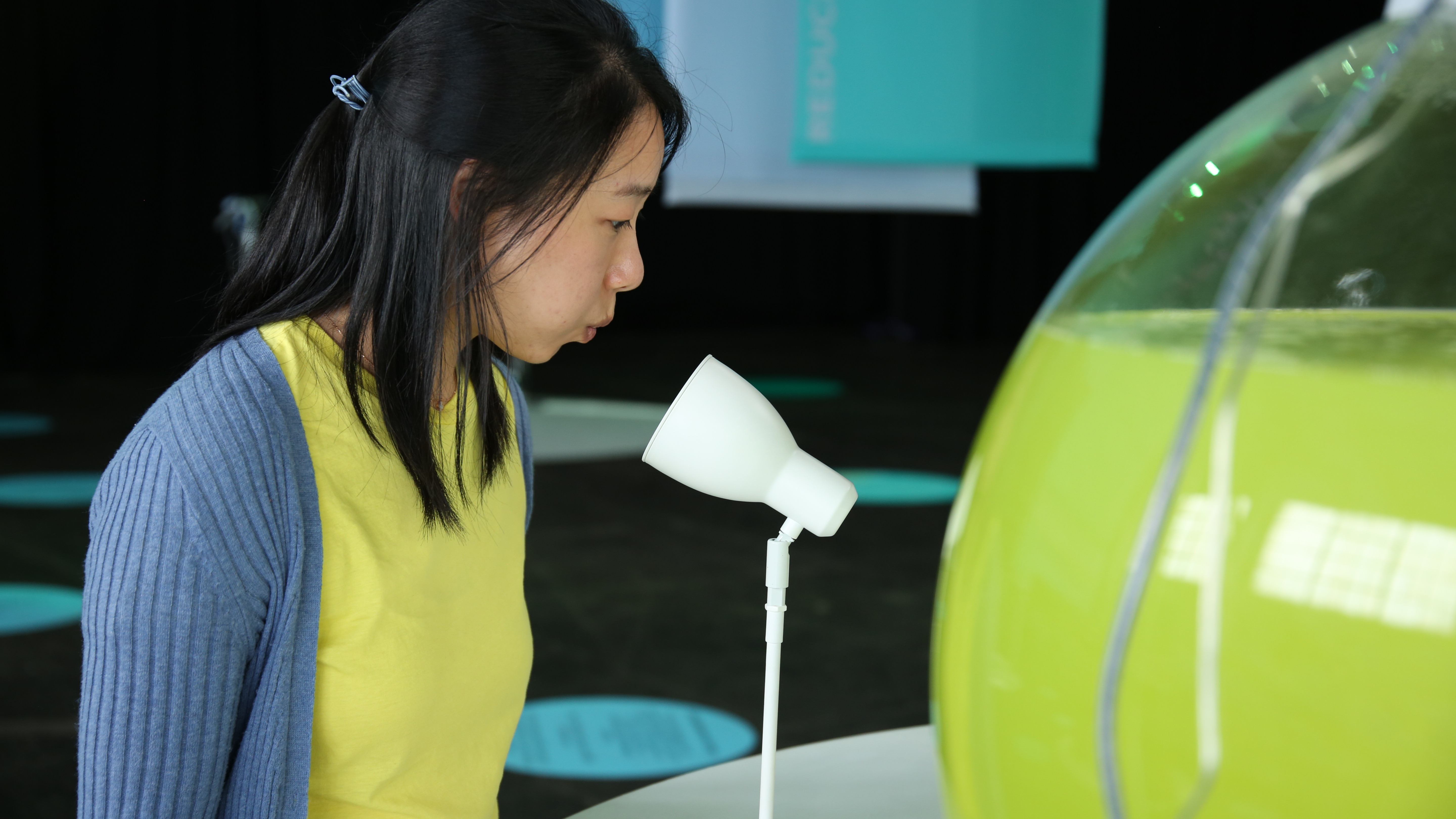
Algae Globe is an interactive sculpture and functional bioreactor that allows people to experience the symbiotic relationship between humans and microalgae. As visitors blow into the funnels, lights and bubbles are triggered, allowing people to feed the algae with lights and the carbon dioxide they exhale.
This piece was developed and designed by Hayeon Hwang.
Visit Hayeon Hawng's website to learn more
Channeling Waste
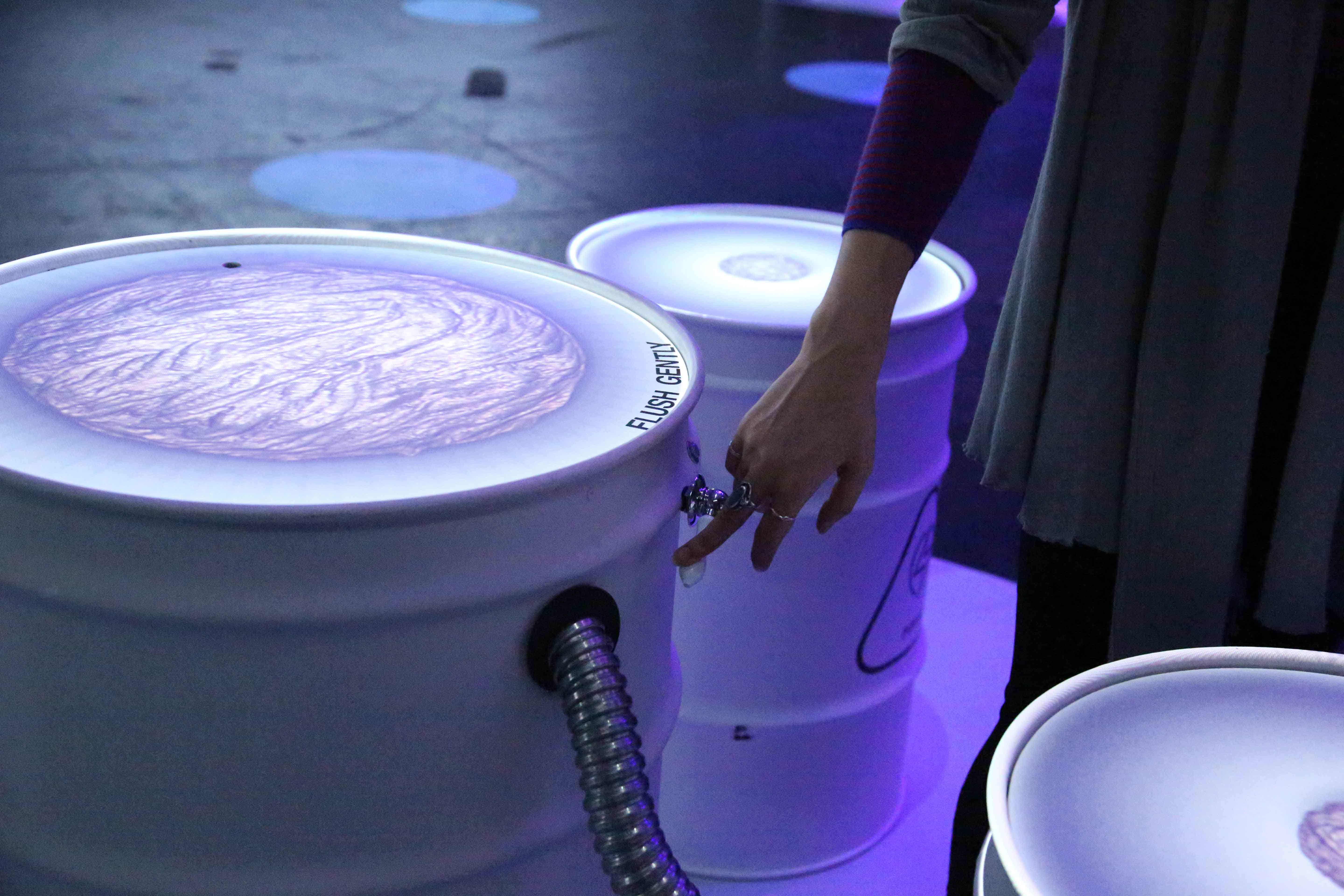
Sewage, or sludge, has the potential to be transformed into useful byproducts. Channeling Waste is an interactive sculpture that demonstrates how every flush can be turned into electrical power, fuel for transportation, or fertilizer for agriculture. The technology for biodigesters is being applied at different scales around the world, creating a circular system to create value out of what was previously a big problem.
Visitors flush toilet handles on a large waste barrels that trigger projected animations and sound. The unexpected outcomes of electricity, biofuel, and fertilizer contrast with the expectations of biological waste, instead showing the potential alternatives.
This piece is a collaboration between Isabella Vento and Ayal Rosenberg.
Visit Ayal Rosenberg's website to learn more
Visit Isabella Vento's website to learn more
Back to Top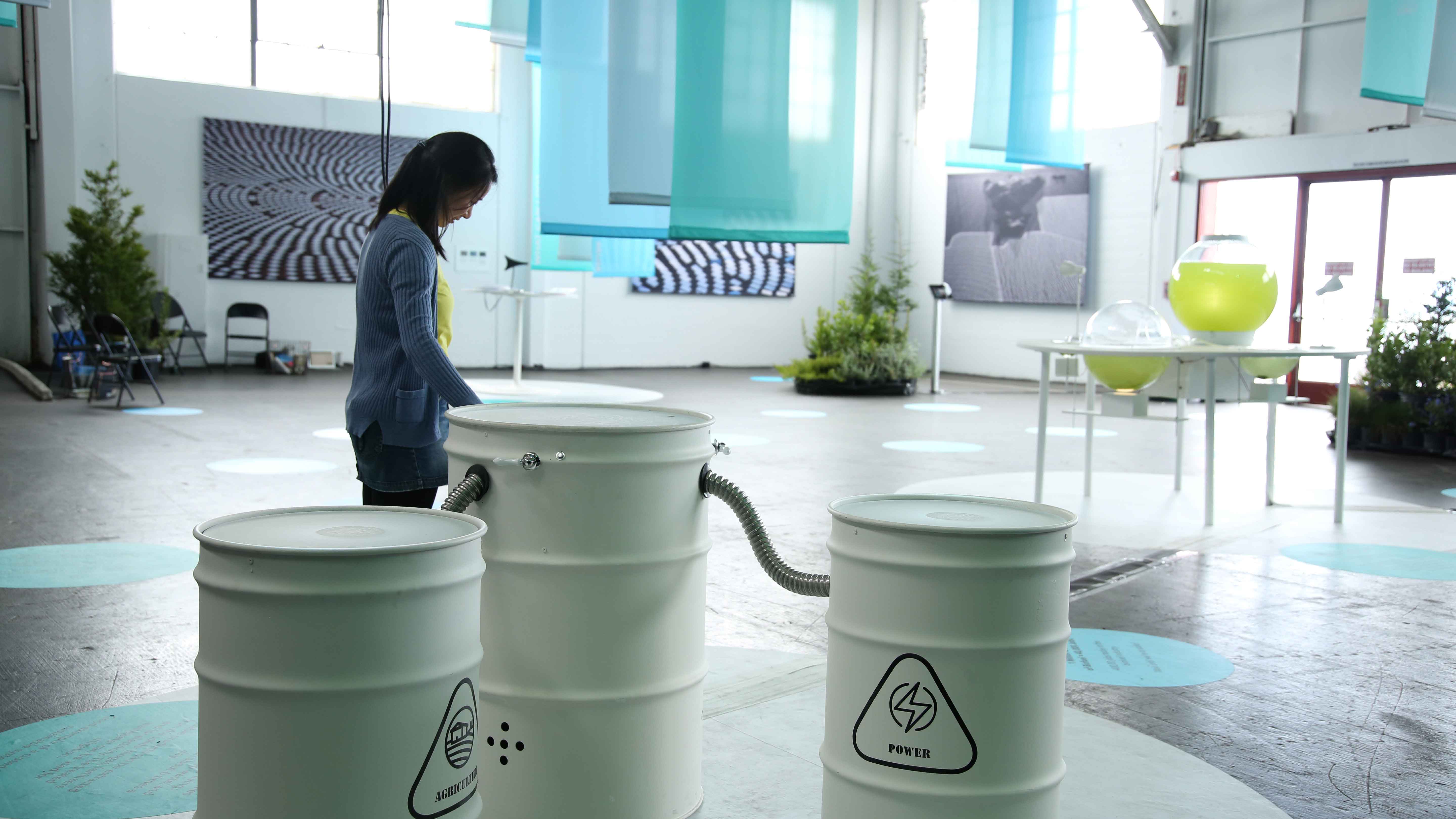
Solar Silk
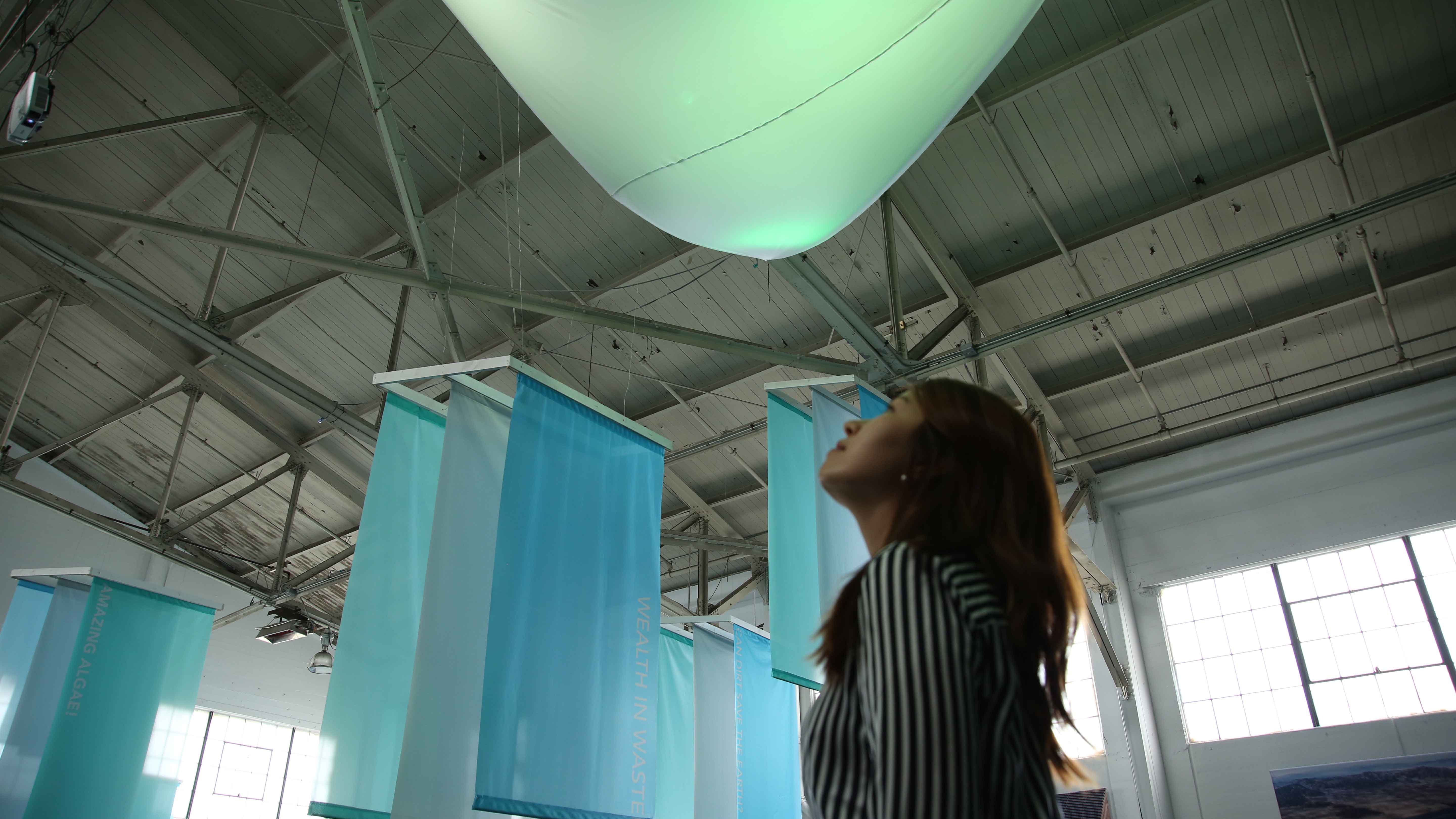
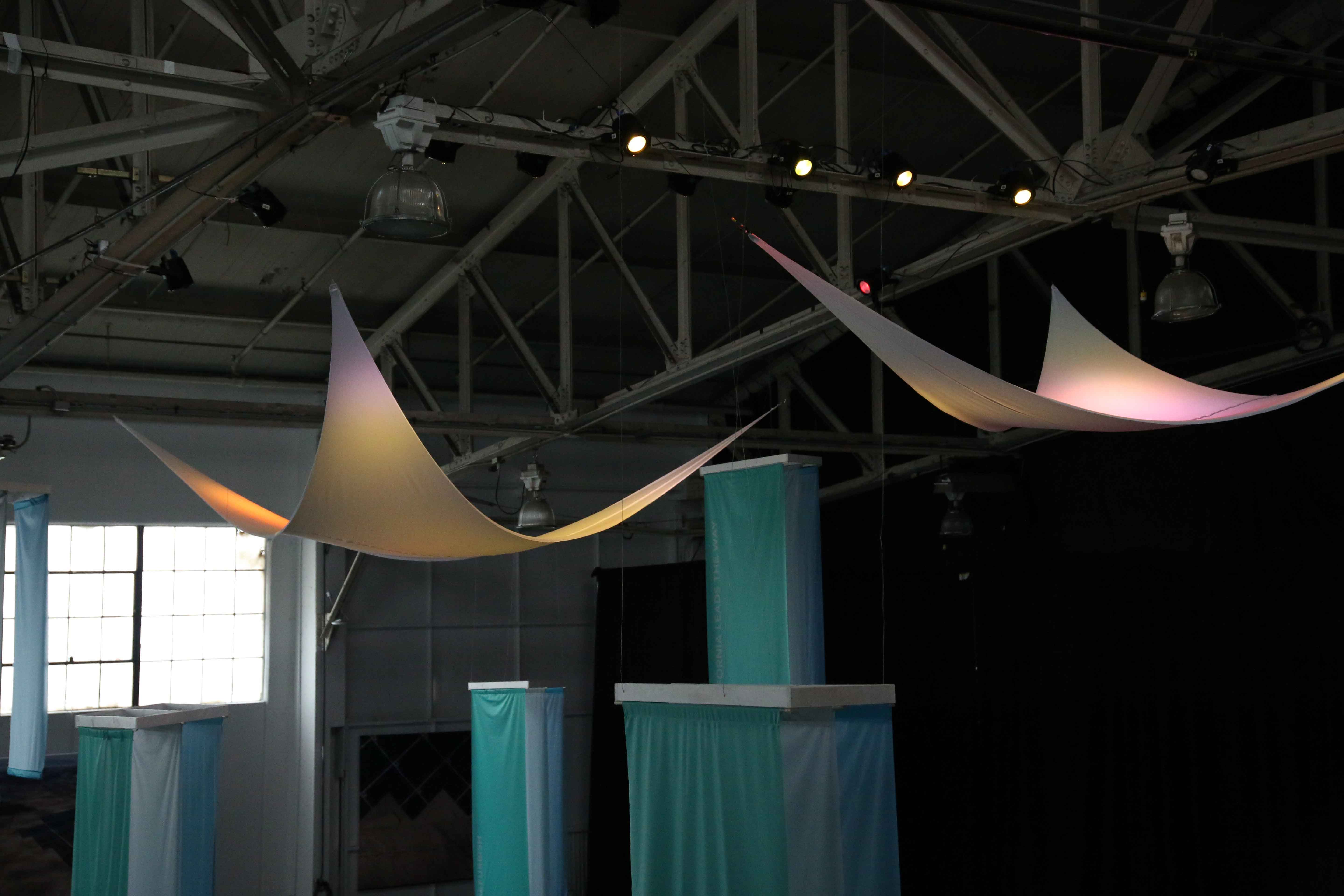
Enough solar energy reaches the earth everyday to power all of human civilization. Solar Silk is a light installation that hovers above the exhibition space, celebrating solar energy, one of the most prevalent and promising alternative energy resources.
Solar Silk visualizes real time UV index data that indicates the amount of potential solar energy at Fort Mason in San Francisco, where the piece is installed, in real time. The colors lighting the fabric can be mapped to the UV index on the floor. The changing colors and patterns of the light reflect the availability of solar energy to be harvested. Through long term observation, visitors can perceive changes in available energy.
This piece is a collaboration between Yeseul Song and Michael Simpson.
Visit Yeseul Song's website to learn more
Visit Michael Simpson's website to learn more
Back to TopCarbon Farming
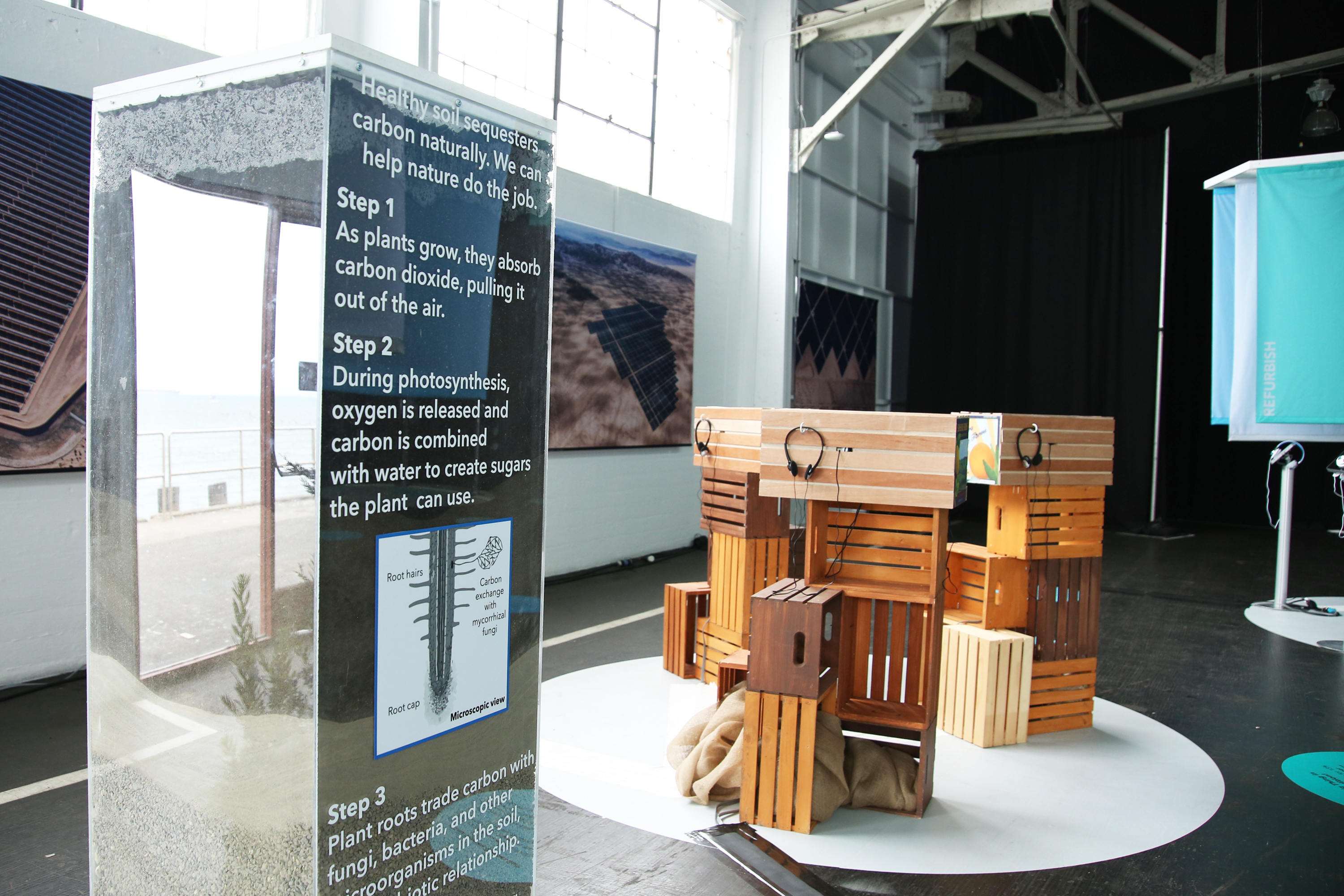
Soil is a major element in earth’s carbon cycles. As plants absorb carbon from the air and trade it with microbes and fungi in the soil, carbon is effectively sequestered. Farming techniques like Regenerative Agriculture, Permaculture, and Carbon Farming all describe methods of farming that reinforce these natural cycles, and can undo some of the damage already done by industrial farming practices.
Carbon Farming is a video and soil sculpture that shows how regenerative agriculture and carbon farming build healthy soil, reduce the need for petroleum-based fertilizers, and fight global warming. Visitors can watch videos from Kiss the Ground and 4 per 1000 through peepholes on fruit crates, which graphically represent conventional agriculture. A six-foot tall soil sculpture show how plants sequester carbon naturally.
This exhibit was developed and designed by Jasmine Soltani.
Visit Jasmine Soltani's website to learn more
Back to Top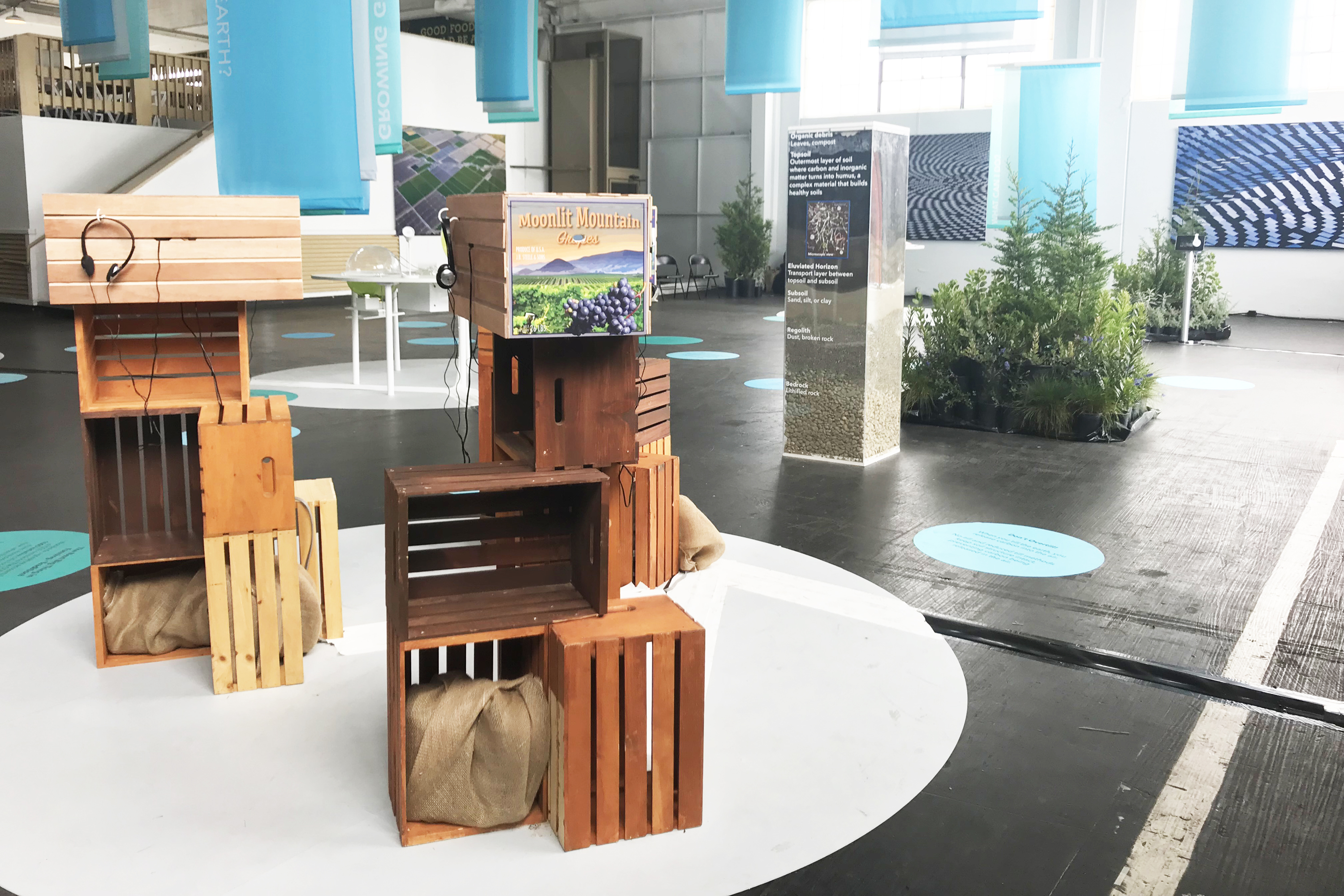

Circular Economy
Capitalism since the industrial revolution has incentivized a linear ‘take-make-use-throw away’ product cycle that creates garbage and consumes energy every step of the way. But products can be redesigned so that the cycle really is a cycle. A circular economy would reduce waste by re-using, re-furbishing, repurposing, redistributing products. Videos from the Ellen MacArthur Foundation, The European Environment Agency, FastCompany, Grist, and the Story of Stuff explain the potential, and envisions a more just economic model.
Back to TopMolten Salt
Renewable energy sources like wind and solar provide intermittent energy. A big challenge is finding an ecologically responsible way to store this energy, to meet energy demand in a predictable way. One innovative technology is to use concentrated solar energy to melt salt and use thermal energy to store solar energy enabling it to be turned into electricity as needed. This model and video from SolarReserve allow visitors to understand how the process works. Visit SolarReserve's website to learn more Visit Jamey Stillings' website to learn more
This exhibit is also in dialog with Jamey Stillings murals, which cover the whole space. Some of these murals are aerial views of Crescent Dunes, the solar project in Nevada. This project produced 42,029 Megawattshours in 2017, the average household in EEUU consumed 10,766 kilowatthours in 2016.

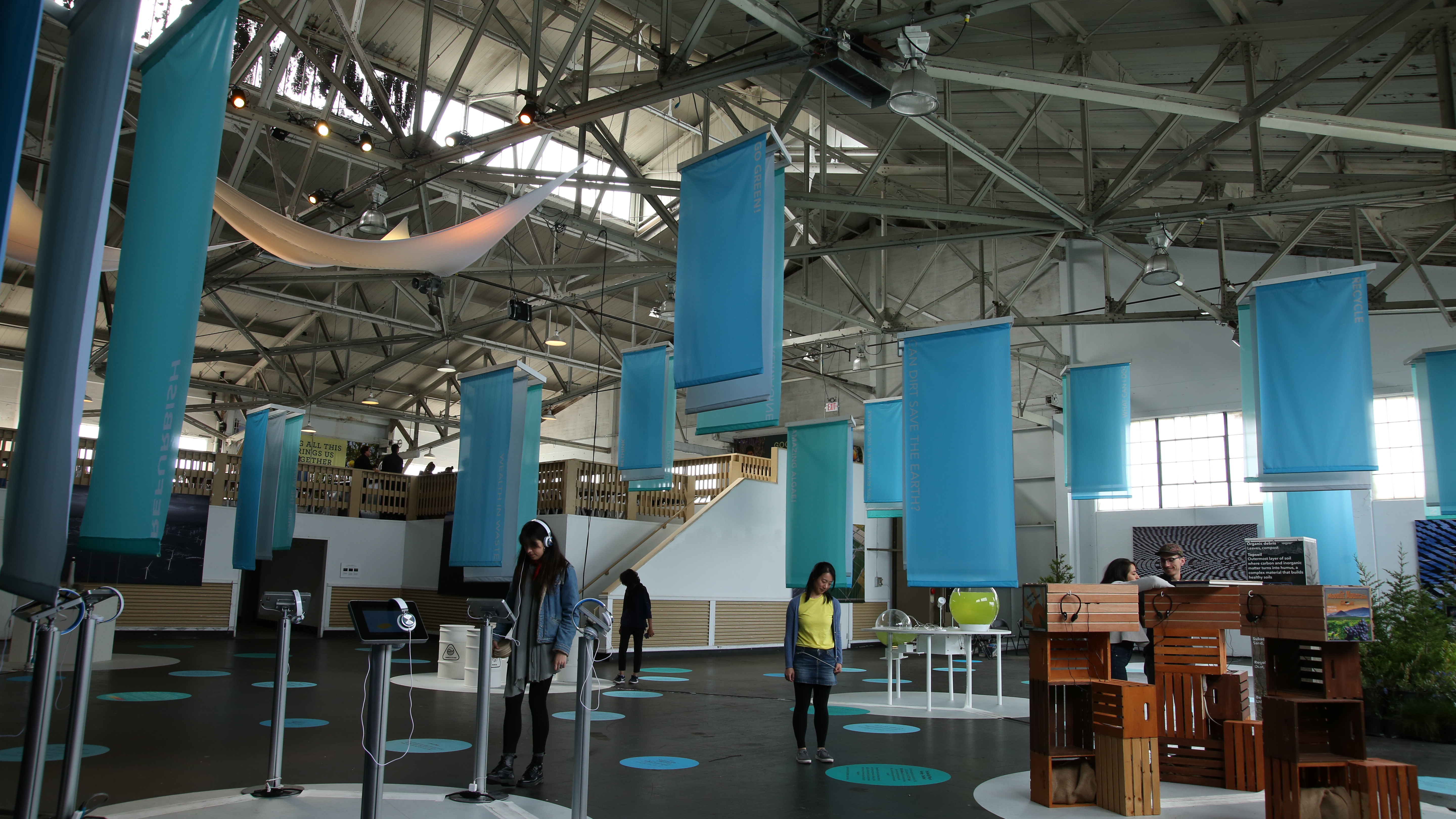
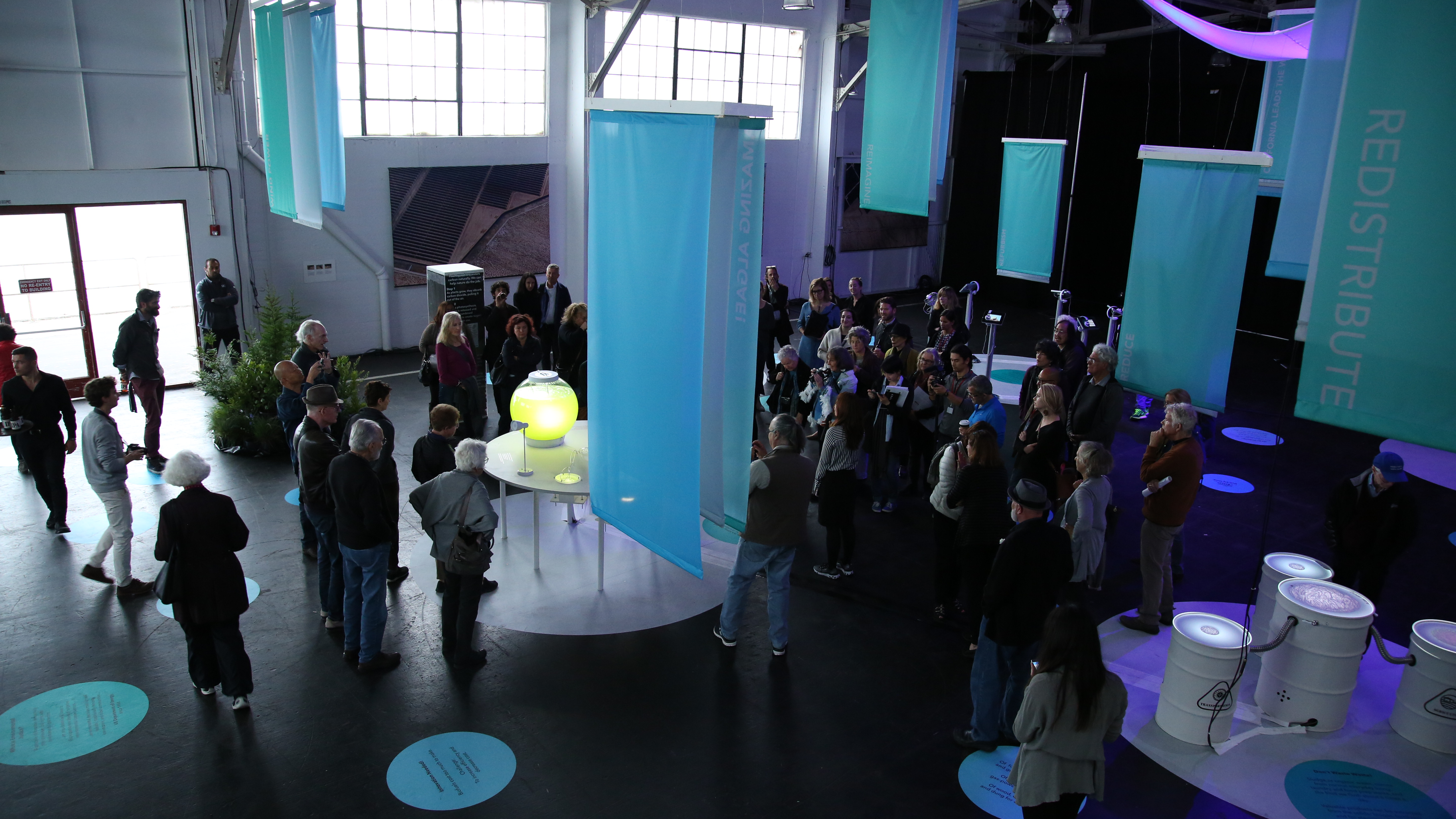
Overall Space
Through ideas hung from the ceiling to dots with provocations and facts the overall space becomes an exploration. An invitation to connect the dots and find ways of getting involved. Around certain exhibits there are kiosks that showcase multimedia related to subjects like: Electric Vehicle transportation, Circular Economy and the work of The San Francisco Parks department which provided the greenery for the space.
Visit Alejandro Matamala's website to learn more
Back to Top